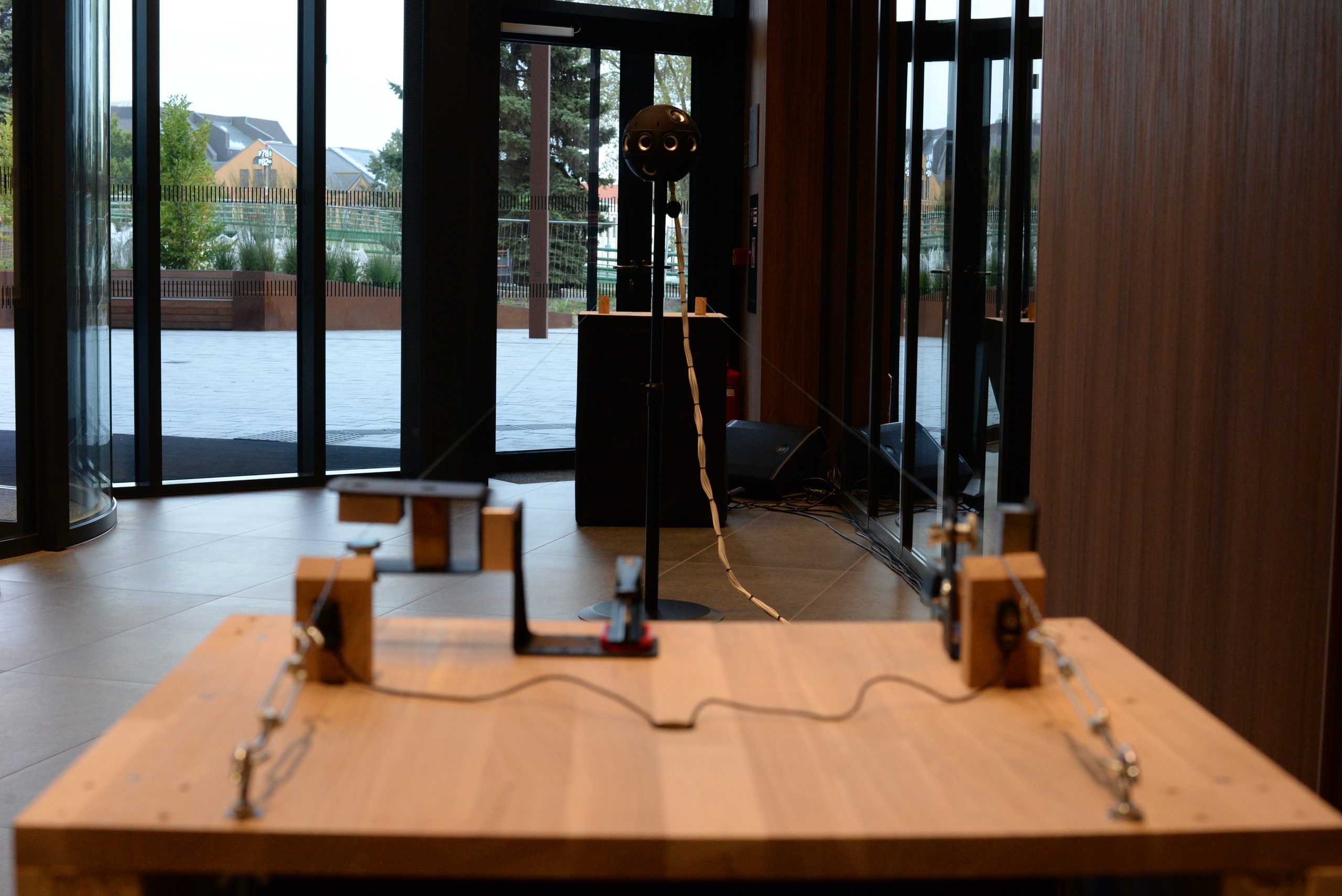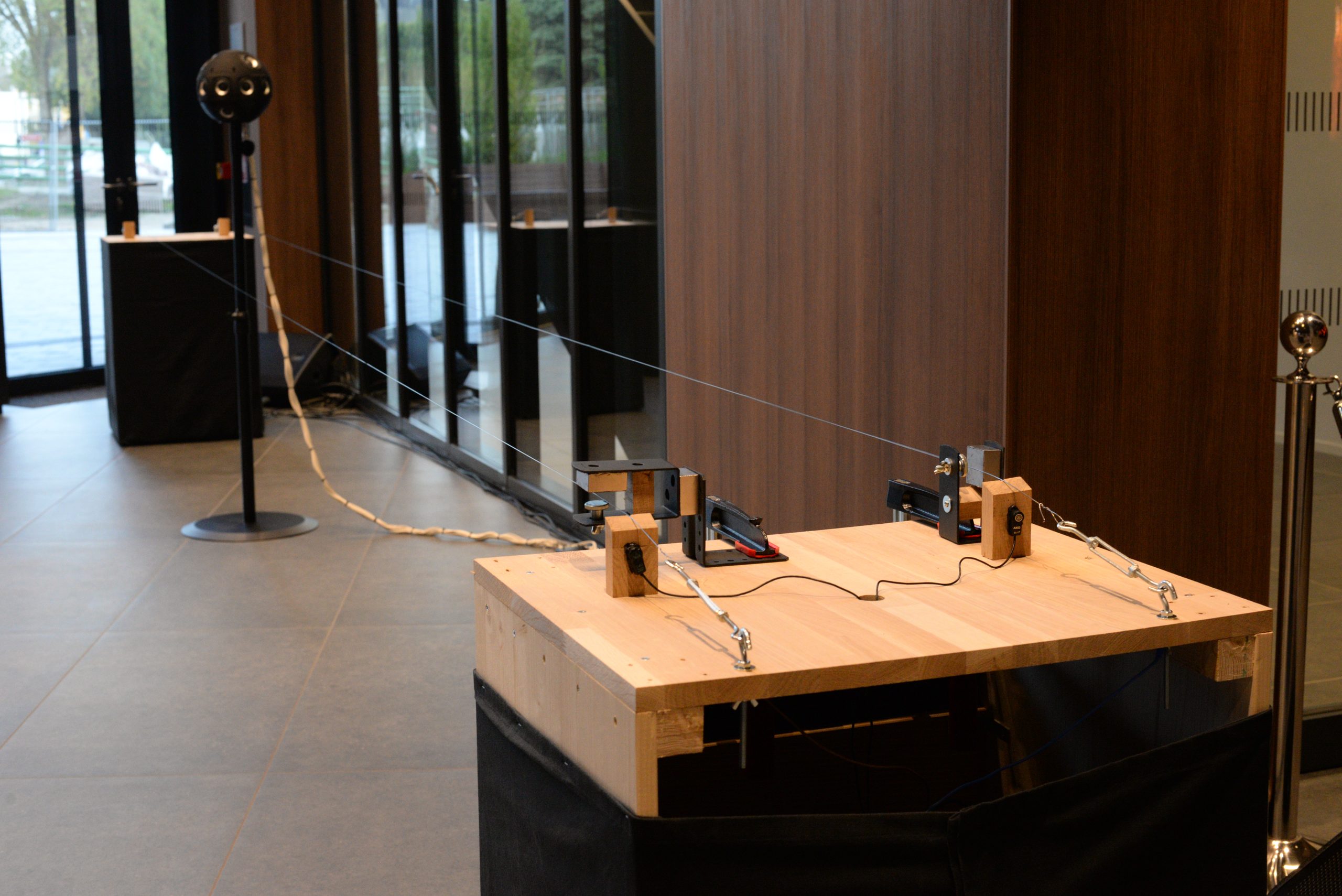
If you are around Klaipeda check out my performance / sound installation as part of Permainų muzika [1] at HANZA verslo centras [2].
- Fri, 9 October 2026, 16:00
- Sat 10 – Sun 11 October 2026, 12:00
- Tue 13 – Thu 15 October 2026, 17:00
- Fri, 16 October 2026, 16:00
[1] https://www.koncertusale.lt/repertuaras/?event-cat=permainu-muzika#
[2] https://maps.app.goo.gl/ke1kz81CKjfT8GRZ8
Austrian sound artist, engineer and electronic music creator Matthias Kronlachner explores spatial sound, technology and the possibilities of live performance in his work.
His practice moves between art and science, where acoustic principles, programming and engineering solutions become tools for creating new listening experiences.
One of the central directions of his work is the development of spatial audio technologies, and in the open-source audio software community Kronlachner is well known as the creator of the multichannel and Ambisonic audio tools “ambiX” and “mcfx”.
He studied at Graz University of Technology, the University of Music and Performing Arts Graz, and the Lithuanian Academy of Music and Theatre. He has developed his artistic practice in Austria, Germany, the USA and Lithuania, performing at festivals such as Ars Electronica Linz, Steirischer Herbst, Wien Modern, Gaida and Jauna muzika. Kronlachner has also collaborated with Klangforum Wien, the Lithuanian Ensemble Network (LENsemble), the Chordos Quartet and other contemporary music performers.
In the “Music of Changes” (“Permainų muzika”) programme “Vibrating Sound” (“Virpantis garsas”), he presents “Spatial Wires – Standing Waves”, a sound installation and live performance in which sound becomes a physically perceptible phenomenon.
At the centre of the work are two resonating wires, the space itself, and the “393” directional sound system, which allows sound to move in different directions.
The wires respond to the frequencies sent to them and begin to vibrate, while the surroundings become an active part of the piece.
Standing waves, overtones and constantly shifting layers of sound emerge. During the performance, Kronlachner controls the process live and responds to what the space returns to him — its acoustics, objects and materials.
Each performance is unique, because the sound depends not only on the performer but also on the place in which it resounds.